Why creating safe spaces matters more than ever
In a meeting about our upcoming Conscious Movement and Pole Teacher Trainings, one of our teachers, Hannah, said something that immediately stayed with me:
“Conscious movement is about much more than movement itself. It is a form of community care.”
The more I thought about it, the more I realised how perfectly it describes what we’re trying to create every day.
A world that needs more connection
The world feels increasingly divided. Social media rewards strong opinions over genuine curiosity. Political debates are becoming more about “us versus them.” People seem quicker to judge, label or dismiss someone simply because they look different, love differently or express themselves in another way.
That worries me. A lot.
Not only because of what it means for society, but because I know how it affects people long before they ever speak about it.
Every body carries a different story
At rasalila, we work with people every day.
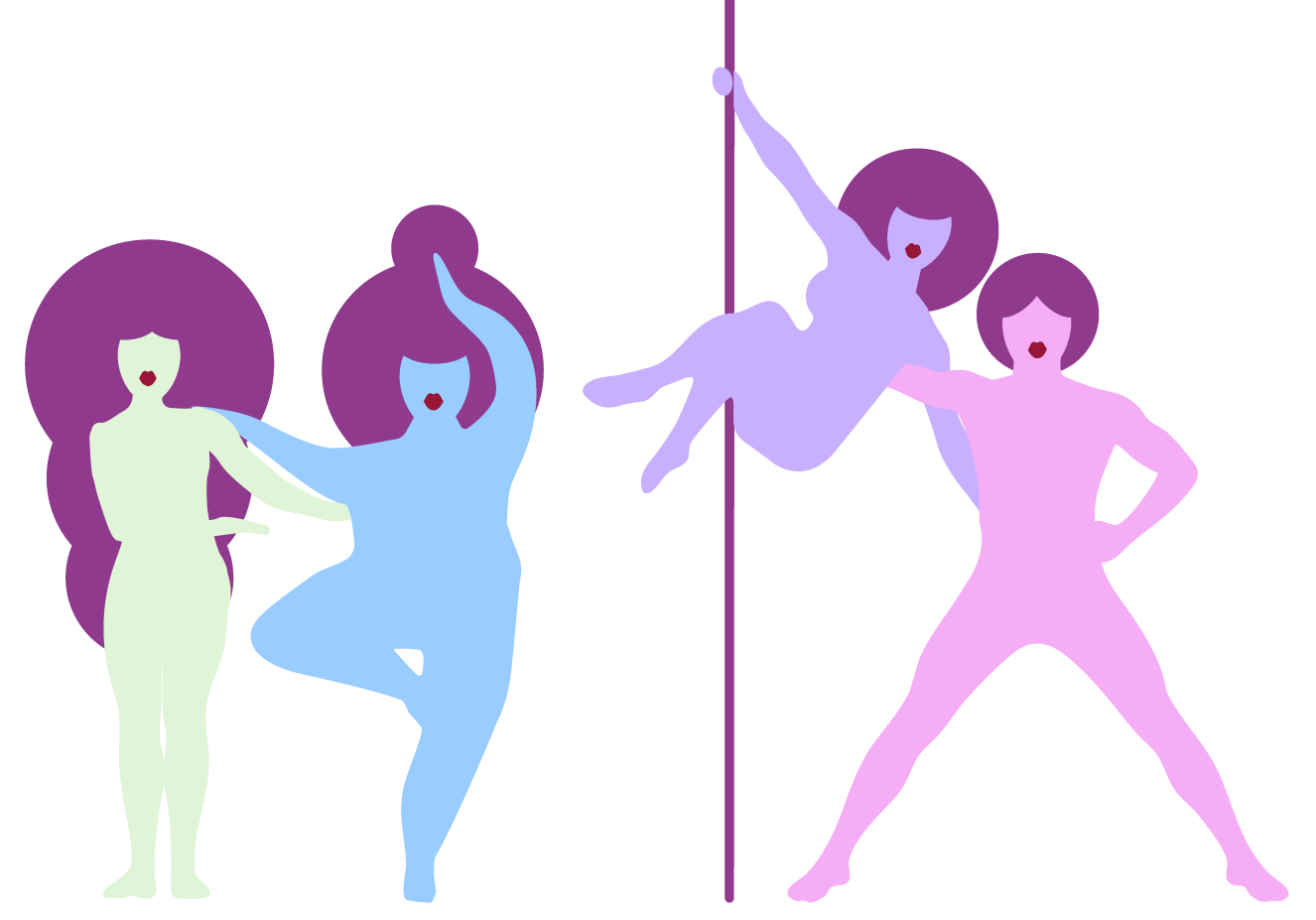
Different bodies. Different stories. Different ways of moving, expressing and showing up.
And the truth is: no one here is the same.
Different levels of strength. Different levels of flexibility. Different identities. Different experiences of what makes someone feel safe, seen or free.
And that’s exactly the point.
Every week, we welcome hundreds of people into our studio. Some walk into their very first dance class convinced they’re “not a dancer.” Others apologise before class has even started because they feel stiff, awkward or “not good enough.” Some are nervous because they don’t think they fit in the image of someone who belongs in a studio. Others simply carry experiences that make it difficult to trust their body or the people around them.
Safe spaces don’t happen by accident
One of the things we hear most often is that rasalila feels like a home away from home. A place where people feel safe, welcomed and free to be themselves. Where they connect and make new friends.
To me, that is actually one of the greatest compliments we can receive.
Because that feeling doesn’t happen by accident.
It is created through hundreds of small choices. The way we welcome someone when they walk through the door. The language our teachers use. Respecting consent and boundaries. Encouraging fun and creativity instead of comparison. Celebrating different bodies instead of expecting everyone to move or be the same way.
Conscious movement isn’t just about learning new skills or becoming stronger and more flexible. It’s about creating places where people can reconnect with themselves and with each other.
Especially now, when the world often feels increasingly polarized, I believe those spaces matter more than ever.
Equality doesn’t mean everyone needs the same thing
To me, equality doesn’t mean treating everyone exactly the same. People don’t all need the same things to feel safe, welcome or able to learn. Equality means everyone deserves the opportunity to participate without having to be something that they are not.
That asks something from all of us;
- It asks us to stay curious instead of making assumptions.
- To communicate with kindness.
- To respect boundaries and consent.
- To recognise that someone else’s experience may be very different from our own.
- To make room for different identities, bodies, cultures and ways of expressing ourselves, even when we don’t fully understand them.
With Pride Amsterdam starting on 25 July, it’s a beautiful reminder that visibility and inclusion can never be taken for granted. Pride is, of course, a celebration, but it’s also a reminder that many people are still fighting for the freedom to simply exist as themselves without fear, shame or discrimination.
Whether someone is queer, straight, young, older, flexible, stiff, black or white, confident or insecure, everyone deserves spaces where they can move, learn and express themselves without feeling like they have to hide parts of who they are.
That’s the kind of community we build at rasalila.
Teaching movement is teaching community
And it’s also exactly why our (two!) upcoming Conscious Movement Teacher Trainings go beyond techniques, anatomy and teaching methodology. Alongside movement and embodiment, we explore topics such as consent, conscious communication and embodied bias literacy. Because teaching movement isn’t only about sharing exercises. It’s about learning how to create spaces where people feel safe, included and empowered.
If conscious movement is a form of community care, then teaching conscious movement is one of the ways we can help create more of those communities.
I think the world could use a few more of them.
Love,
Willemijn